



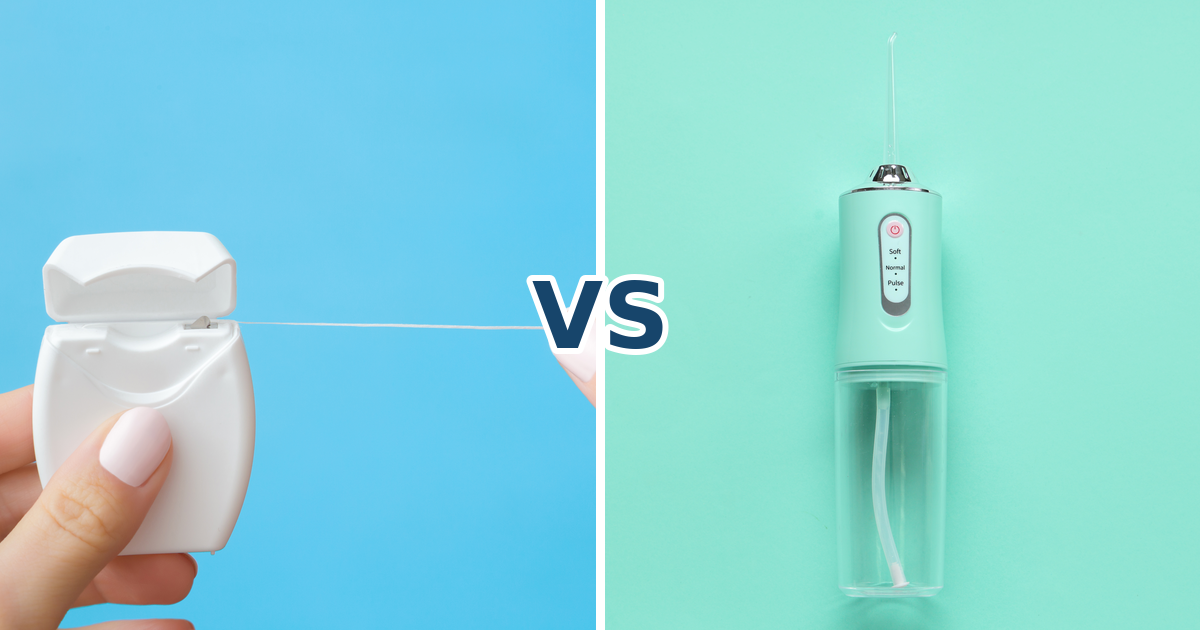
08 Jul Water Flosser vs. String Floss: Which One Cleans Better?
A lot of patients ask us whether a water flosser is worth buying, or whether the string floss they have always used is good enough. It is a fair question. Both clean between your teeth, where a toothbrush cannot reach, and both have solid research behind them. Here is how the two compare so you can decide what works best for you.
How They Are Different
String floss and water flossers do the same job in two different ways.
- String floss is a thin thread you slide between two teeth and curve around each one to wipe plaque off the surface. It cleans by touching the tooth directly.
- A water flosser (sometimes called an oral irrigator) is a small device with a water tank that sends pulses of water between your teeth and along the gumline.
Either way, cleaning between your teeth is meant to go with brushing, not replace it. If you have ever wondered about the timing, we covered that in When Is the Best Time to Floss Your Teeth?.
What the Research Says
You do not have to crown a winner here. The American Dental Association says to clean between your teeth once a day and accepts both methods. Each tool has something it does well.
- Water flossers are strong on gum health. Studies have found that people using a water flosser can see a much bigger drop in gum bleeding and gingivitis than people using string floss. One study put that difference at about 51%. Water flossers have also shown roughly 29% better plaque reduction for people with braces.
- String floss is hard to beat in tight spaces. Because it makes direct contact with the tooth, it does a great job lifting plaque out of tight gaps between healthy teeth, and it has decades of use behind it.
What matters most is doing it every day. The tool you stick with will always beat the one you skip.
String Floss: The Good and the Bad
On the plus side, string floss is cheap, easy to pack for travel, and needs no batteries or water. It also cleans tight contacts really well.
The downside is that it takes some technique and finger control, it is awkward around braces and bridges, and it is the step most people skip. Snapping it hard against your gums can also cause irritation, the same way brushing too hard can.
Water Flosser: The Good and the Bad
Water flossers are easy and gentle to use. They work well around braces, implants, crowns, and bridges. They are very good at reducing gum bleeding, and they help people who struggle with grip from arthritis or hand tremors. Many patients simply find them more comfortable.
The tradeoffs are the higher cost, the counter space, and the need for power and refilling. They can be messy until you get used to them, and they do not scrape the tooth surface as directly as floss does.
Which One Is Right for You?
If you floss with string floss every day and your gums are healthy, keep doing what works. A water flosser is worth a serious look if you wear braces, have implants or bridges (you can read more about implants here), deal with bleeding gums, or find regular floss too fiddly to keep up with. If your gums bleed often, it is also worth reading Common Causes for Bleeding Gums and From Gingivitis to Gum Disease.
Plenty of our patients use both: a water flosser to rinse and settle the gums, and string floss for the tight spots. Whatever you choose, the goal stays the same. Clean between your teeth once a day, brush twice a day for two minutes, and keep up with your regular cleanings.
See Us in Sugar Land
Cleaning between your teeth at home only goes so far, because professional cleanings reach what no tool can on its own. If you are in Sugar Land, Missouri City, or anywhere in Fort Bend County, the team at Imperial Dental Center can show you the right technique for your mouth and help you pick the tools that fit. Schedule your appointment today.
Frequently Asked Questions
Does a water flosser replace brushing?
No. Brushing and cleaning between your teeth do two different jobs. A water flosser works with your toothbrush, not in place of it. Brush twice a day for two minutes and clean between your teeth once a day.
Can a water flosser replace string floss?
For a lot of people it can, especially if you have braces, implants, bridges, or trouble using regular floss. Some dentists still suggest using both. The important part is cleaning between your teeth once a day.
Do water flossers work well with braces?
Yes. A water flosser is one of the easiest ways to clean around braces, because it rinses around the brackets and wires without any threading.
Are water flossers safe for sensitive or receding gums?
They are gentle and safe for most people. Start on the lowest pressure and turn it up only if it feels comfortable. They are actually good at reducing gum bleeding, but if your gums bleed often, have your dentist take a look.
What kind of water goes in a water flosser?
Warm tap water is fine. Some people add a little antimicrobial mouthwash, but plain water does the job.
How often should I use a water flosser?
Once a day, the same as the ADA recommends for cleaning between your teeth any way you do it.

Dr. Dragana Angelova
Imperial Dental Center
“We love to see you smile”